
Healthcare waste reduction
UK-specific services for NHS trusts and independent healthcare
providers, aligned with HTM 07-01 and designed for clinical, operational and catering teams.
Most healthcare engagements start with a Waste Open Day or Site Diagnostic.

Services for healthcare teams
Practical, ward-relevant services that combine compliance with staff engagement, delivered by people who have worked inside healthcare waste systems.

Site waste diagnostics
On-site assessment of waste infrastructure, waste segregation behaviours and compliance gaps, with a prioritised improvement plan.

Staff training & engagement
Practical face-to-face waste segregation briefings designed for clinical, operational and catering teams.

Train-the-trainer program
Equips internal champions to run repeatable waste segregation briefings, embedding capability inside the trust.

Communication & signage
Bin labels, ward posters, point-of-use prompts and public-facing signage designed for healthcare settings.

Waste Open Day delivery
Hands-on pop-up event to engage teams in non-clinical areas. With staff surveys and a standardised post-event report.

Compliance support
Practical guidance on HTM 07-01: Safe Management of Healthcare Waste, including audit readiness and segregation standards.
Case studyReducing hazardous waste, saving £200k a year
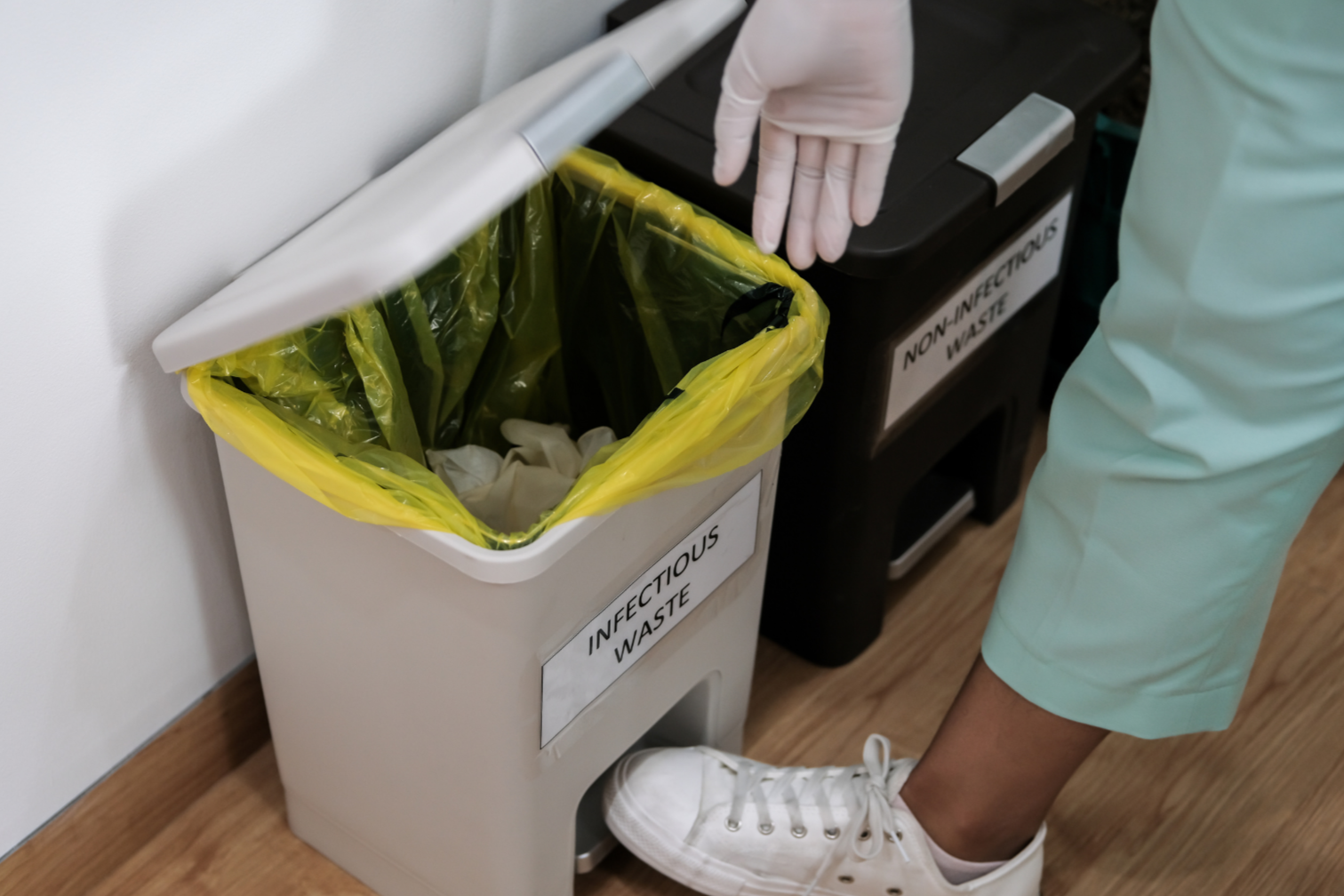
High levels of hazardous waste and inconsistent handling across teams were driving up costs until a targeted staff engagement programme fixed the problem at the source.
Ready to see your waste?
Get in touch to talk through your trust's waste and HTM 07-01 compliance, or book a Waste Open Day to get started.
Frequently asked questions
-
HTM 07-01: Safe Management of Healthcare Waste is the NHS's technical guidance for handling, segregating and disposing of healthcare waste. All NHS trusts and healthcare providers in England are expected to follow it. Compliance covers segregation standards, storage, documentation and audit readiness — and gaps often show up first at ward level, in everyday bin use.
-
Mostly through better segregation. Infectious waste costs several times more to dispose of than offensive (non-infectious) waste, so every misplaced item in a yellow or orange bag is money lost. The NHS Clinical Waste Strategy targets a 20-20-60 split across incineration, infectious and offensive streams — most trusts aren't there yet, which means the savings are still on the table.
-
A site waste diagnostic assesses your waste infrastructure, segregation behaviours and compliance gaps in situ — walking wards, back-of-house and catering areas rather than relying on contractor data alone. The output is a prioritised improvement plan: what to fix first, what it costs to leave, and where the quick wins sit.
-
Yes — in non-clinical areas. A Waste Open Day is a hands-on pop-up event where teams sort and see a sample of their site's waste first-hand. In healthcare settings, it runs in offices, catering and public areas, supported by staff surveys and a standardised post-event report. Clinical streams are covered separately through diagnostics and training.
-
Face-to-face, at the point of use. Short, practical briefings designed for clinical, operational and catering teams work better than posters alone — and a train-the-trainer programme means internal champions can repeat them, so the capability stays inside the trust rather than leaving with a consultant.
-
Usually with a site waste diagnostic on a single site. It's the fastest way to see where your compliance gaps and cost hotspots sit, and the improvement plan gives you a clear case to take to estates or finance. From there, training, signage and Waste Open Days can be scoped around what the diagnostic finds.